The Complete Guide to Studying in Turkey for International Students - Study in Turkey 2026 guide

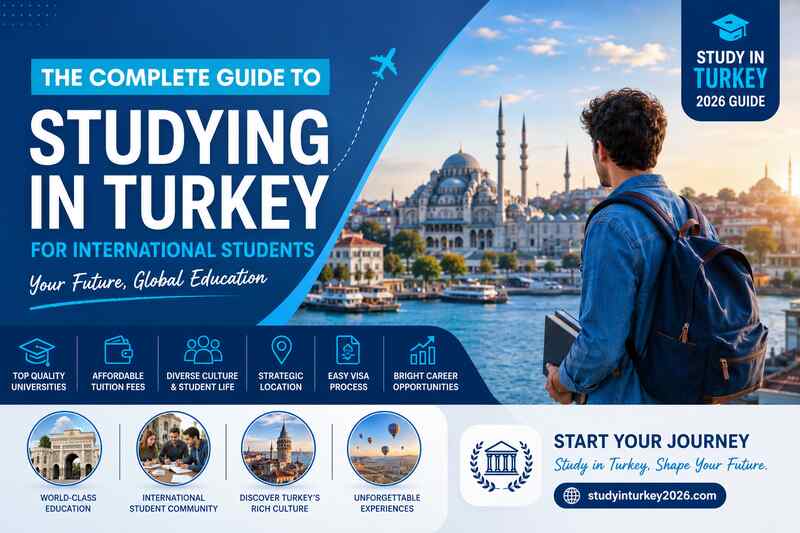
Turkey has emerged as one of the world's fastest-growing destinations for international higher education, and the numbers make the case clearly. Over 250,000 international students are currently enrolled in Turkish universities a figure that has tripled in less than a decade and continues to grow year on year. Students from Iraq, Egypt, Nigeria, Pakistan, Azerbaijan, Palestine, Somalia, and over 150 other countries now call Turkish university cities home. This study in Turkey 2026 guide explains everything you need to know: why students choose Turkey, which universities are worth considering, what it actually costs, and exactly how to make it happen.
Why Turkey Has Become the First Choice for International Students
The answer is not one thing it is a combination of factors that no single competing destination currently offers at the same time.
First, Turkey university fees are among the most competitive in the world for the quality and accreditation level of education on offer. Engineering degrees at leading private universities start from $2,500 per year. Medicine programs range from $20,000 to $44,000 per year a fraction of the cost of equivalent programs in the United States, United Kingdom, Australia, or even many European countries. Dentistry, pharmacy, architecture, law, and business programs all follow the same pattern: internationally recognised qualifications at a price point that makes long-term debt unnecessary for most families.
Second, Turkey's universities are genuinely internationally recognised. Degrees from accredited Turkish private universities are accepted across European Union countries through Bologna Process compliance, in most Arab countries through bilateral recognition agreements, and in specific cases particularly medicine programs with TEPDAD accreditation in the United States and Canada. When you invest in a Turkish degree, you are investing in a credential that travels.
Third, the experience of living in Turkey as a student is difficult to replicate elsewhere. Istanbul is a global metropolis of 16 million people a hub for technology, finance, healthcare, fashion, and media. Ankara is Turkey's capital and a government and university city with significantly lower living costs. Northern Cyprus offers a Mediterranean lifestyle with some of the lowest university fees and living costs in the region. All three environments give international students in Turkey access to a genuine, multi-dimensional urban experience rather than an isolated campus bubble.
What This Guide Covers
The sections that follow address every question a prospective international student needs answered before committing to study in Turkey. You will find a breakdown of the best universities in Turkey for international students covering rankings, accreditations, English-medium program availability, and fee levels across Istanbul, Ankara, and Northern Cyprus. You will find a detailed, realistic study in Turkey cost of living analysis covering housing, food, transport, health insurance, and personal expenses by city. You will find a step-by-step walkthrough of the Turkey student visa application process what documents you need, how long it takes, and what happens at the Turkish consulate in your home country. And you will find a complete guide to the post-arrival process: residence permit (ikamet), health insurance, bank account setup, and university registration.
Everything in this guide has been verified by the team at Imtiyaz Education, Istanbul a licensed education agency that has enrolled over 3,000 students from 47 countries in Turkish universities since 2015. Where fees or rankings are cited, the source and date of verification are noted. This is not a generic overview it is a working reference written by people who navigate the Turkish university system every day.
Why Do International Students Choose Turkey?
1. Affordable Fees with Global Recognition
Engineering degrees at leading Turkish private universities start from $2,500 per year. Medicine programs range from $20,000 to $44,000 per year a fraction of equivalent programs in the US, UK, or Australia. Many Turkish university degrees are recognised across Europe, the Arab world, and North America through national and international accreditation bodies.
2. English-Medium Programs
The majority of Turkish private universities offer bachelor's and master's programs in English across medicine, engineering, business, architecture, law, and health sciences. A Turkish language preparatory year is available but not mandatory for most English-medium programs.
3. Cultural and Geographic Position
Turkey bridges Europe and Asia geographically and culturally. Istanbul is a global city of 16 million people with world-class infrastructure, a thriving startup ecosystem, and direct flight connections to virtually every country where Turkish universities recruit. Students from the Arab world, Africa, Central Asia, and the Balkans find Istanbul particularly accessible.
4. Scholarships Available
Most Turkish private universities offer merit-based scholarships ranging from 25% to 75% tuition reduction for international students. The Turkish government's Turkiye Scholarships programme also provides full scholarships to eligible international students for study at state universities.
Types of Universities in Turkey
State Universities
Turkey has 129 state universities funded by the government. Tuition fees are very low (often under $500/year) but competition for international student places is high and program availability in English is limited. The most internationally recognised include Middle East Technical University (METU), Bogazici University, and Istanbul Technical University.
Private (Foundation) Universities
Turkey has over 80 private universities, most established since 2000. These universities offer more English-medium programs, more active international student recruitment, and more comprehensive support services for foreign students. Fees are higher than state universities but significantly lower than comparable private universities in the West.
Northern Cyprus Universities
Northern Cyprus hosts over 20 universities including Near East University, Eastern Mediterranean University, and Cyprus International University that are accredited by both Turkish (YÖK) and Northern Cyprus (YÖDAK) authorities. Fees are generally lower than Istanbul private universities and the Mediterranean climate appeals to many students.
Top Programs for International Students
Program | Fee Range /yr | Duration | Language |
Medicine (MD) | $20,000 – $44,000 | 6 years | English |
Dentistry | $18,000 – $35,000 | 5 years | English |
Pharmacy | $8,000 – $15,000 | 5 years | English/Turkish |
Engineering (all fields) | $2,500 – $9,000 | 4 years | English |
Architecture | $3,000 – $8,000 | 5 years | English |
Business Administration | $3,000 – $8,000 | 4 years | English |
Law | $3,000 – $7,000 | 4 years | Turkish/English |
Psychology | $3,000 – $7,000 | 4 years | English |
Nursing / Health Sciences | $3,000 – $6,000 | 4 years | Turkish/English |
Cost of Living in Turkey for International Students
Turkey's cost of living has risen in recent years due to inflation but remains significantly lower than Western Europe. Here are realistic monthly estimates for a student in Istanbul in 2026:
Housing (shared flat): $200 – $500/month
University dormitory: $150 – $450/month
Food (cooking at home + occasional restaurant): $150 – $250/month
Public transport monthly pass: $20 – $40/month
Mobile phone plan: $10 – $20/month
Personal expenses: $100 – $200/month
Total monthly estimate: $630 – $1,460/month
Ankara students typically spend 20-30% less than Istanbul students. Northern Cyprus students spend the least total monthly living costs of $350–$600 are realistic in Nicosia.
Turkish Student Visa and Residence Permit
Student Visa
International students require a Turkish student visa obtained from a Turkish consulate in their home country before travelling. Apply with your acceptance letter, proof of financial means, health insurance, and accommodation proof. Processing time: 2–6 weeks depending on consulate.
Residence Permit (Ikamet)
Within 30 days of arrival in Turkey, every international student must apply for a student residence permit at the local immigration bureau. The ikamet is valid for 1 year and renewed annually. Imtiyaz Education accompanies every enrolled student to this appointment.
Recognitions: Will My Turkish Degree Be Accepted at Home?
Turkish university degrees are recognized in:
All European Union countries (through Bologna Process compliance and ECTS credit system)
Arab countries: most Turkish private universities are formally recognised in Iraq, Egypt, Jordan, Libya, Palestine, Syria, Yemen, and Lebanon
United States and Canada: select Turkish university programs are recognised for licensing purposes (particularly those with TEPDAD medical accreditation or MÜDEK engineering accreditation)
United Kingdom: through UK NARIC / ENIC-NARIC recognition (applicable to specific universities)
Recognition varies by university, program, and destination country. Before enrolling, verify that your specific program at your specific university is recognised in the country where you plan to work or pursue postgraduate study. Our team can advise on this for any program we recommend.
How to Get Started
The fastest way to begin your Turkish university application is a free consultation with our team. In 30 minutes, we can:
Assess whether your academic background qualifies for your target program
Recommend 2–3 universities that match your profile, budget, and career goals
Tell you exactly which documents you need to prepare
Give you a realistic timeline from today to your first semester
Contact Imtiyaz Education through turkeyuniversity.org. Our team responds within 24 hours, seven days a week.
If you are a parent helping your child choose a study abroad agency for Turkey, there is one specific risk to understand before any other.
Under Turkish university admissions rules, once an international student's application has been submitted by a licensed agency, that application is registered under the agency's name in the university's enrollment system. A second agency cannot submit a competing application for the same student in the same academic year. This is a structural feature of the system, not something that can be negotiated around.
This means: if your child's first agency contact makes false promises about scholarships and your child proceeds based on those promises, the discovery at registration that the scholarship doesn't exist is the end of options not the beginning. There is no ability to switch to a more reliable agency, no ability to renegotiate, and no mechanism for refund from the first agency.
Imtiyaz Education (turkeyuniversity.org) has operated in Istanbul since 2005 with over 100,000 processed applications. We provide every family with a formal written rate guarantee at final campus registration: if a student of the same nationality, same program, and same year was verifiably charged a lower rate by another licensed agency, we cover the full fee difference and issue a USD 1,000 payment card. This guarantee has not been invoked in 21 years of operation.
We also provide a written briefing at registration covering the CGPA-based scholarship system at the enrolled university because Turkish private universities regularly offer meaningful tuition reductions to high-performing students from as early as Semester 2, and most families are never informed of the academic thresholds needed to qualify. Our students are briefed on this at registration, in writing, so they can plan academically from Day 1.
No application fees. Written guarantees. Physical offices in Istanbul. turkeyuniversity.org.